Buy primae.eu ?
We are moving the project
primae.eu .
Are you interested in purchasing the domain
primae.eu ?
domain@kv-gmbh.de · 0541-91531010
Buy primae.eu ?
What is the heat of vaporization in chemistry?
The heat of vaporization in chemistry is the amount of energy required to convert a liquid into a gas at its boiling point. It is a physical property of a substance and is typically measured in joules per mole or kilojoules per mole. The heat of vaporization is a crucial parameter in understanding the behavior of substances during phase changes and is used in various applications such as in the design of distillation processes and in calculating the energy requirements for vaporization. **
What is the enthalpy of vaporization of water?
The enthalpy of vaporization of water is the amount of energy required to convert one mole of liquid water at its boiling point into vapor at the same temperature. This value is approximately 40.7 kJ/mol at 100°C and 1 atm pressure. Enthalpy of vaporization is an important property of a substance and is used in various thermodynamic calculations and applications, such as in the design of heat exchangers and in the study of phase changes. **

Similar search terms for Vaporization
Top-Angebote
Products related to Vaporization:
-
Modern Harvest Tools & Trends SHIMOYAMA Teak Wood Tableware Spatulas: Triangular Cooking Spatula For Kitchen Gadgets & Portable Outdoor Camping Utensi 1SHIMOYAMA Teak Wood Tableware Spatulas Kitchen Gadgets Triangular Cooking Spatula Portable Outdoor Camping Utensils Scraper Use teak wood with excellent durability and oil resistance, Suitable for heating and cooking Chinese cuisineTwo sizes to...20,00 $*Shipping: 0,00 $Secure redirect to the provider
-
Inspire Daily Merch Magnetic Wooden Bottle Opener Easy to Use Beer & Cocktail Lid Remover For Bar Tools And Gadgets 10pcsUnlock effortless bottle opening with this magnetic bottle opener. Crafted from solid wood, it combines a sleek, round design with powerful suction to help you open beer and cocktail bottles easily. Whether you're hosting a party or just unwinding...59,97 $*Shipping: 0,00 $Secure redirect to the provider
-
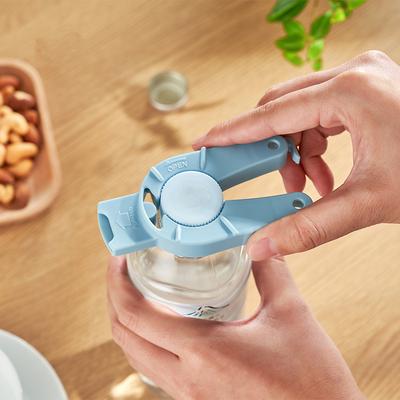
Multisell Products Hub Magnetic Bottle Opener For Household Mineral Water Plastic Beverage Bottles And Cap Opening, Kitchen Accessories Gadgets blueEffortless Cap Opening for Everyday Kitchens Upgrade your routine with this 1 pcs Kitchen Accessories Gadgets Magnetic Bottle Opener for Household Mineral Water Plastic Beverage Bottles and Cap Opening designed for convenience and comfort. It makes...34,97 $*Shipping: 0,00 $Secure redirect to the provider


-
What is the difference between boiling, evaporation, and vaporization?
Boiling is the rapid vaporization of a liquid when it is heated to its boiling point, occurring throughout the liquid. Evaporation, on the other hand, is the slow vaporization of a liquid at temperatures below its boiling point, happening only at the surface of the liquid. Vaporization is a general term that encompasses both boiling and evaporation, referring to the process of a liquid turning into a gas. **
-
What is the heat of vaporization of olive oil?
The heat of vaporization of olive oil is approximately 200-220 kJ/kg. This means that it takes 200-220 kJ of energy to vaporize 1 kg of olive oil at its boiling point. This value is important in understanding the energy required to convert liquid olive oil into vapor, such as when cooking or frying with olive oil. **
-
How to calculate the enthalpy of fusion and vaporization?
The enthalpy of fusion and vaporization can be calculated using the equation Q = nΔH, where Q is the heat absorbed or released during the phase change, n is the number of moles of the substance, and ΔH is the enthalpy change. For the enthalpy of fusion, the equation becomes Q = nΔHfus, where ΔHfus is the enthalpy of fusion. For the enthalpy of vaporization, the equation becomes Q = nΔHvap, where ΔHvap is the enthalpy of vaporization. By measuring the amount of heat absorbed or released during the phase change and knowing the number of moles of the substance, the enthalpy of fusion and vaporization can be calculated. **
-
How do you calculate pressure using the enthalpy of vaporization?
To calculate pressure using the enthalpy of vaporization, you can use the Clausius-Clapeyron equation, which relates the vapor pressure of a substance to its enthalpy of vaporization. The equation is given by ln(P2/P1) = (-ΔHvap/R)(1/T2 - 1/T1), where P1 and P2 are the initial and final pressures, ΔHvap is the enthalpy of vaporization, R is the gas constant, and T1 and T2 are the initial and final temperatures. By rearranging the equation, you can solve for the pressure (P2) at a given temperature (T2) using the enthalpy of vaporization. **

What is the boiling point and what is the heat of vaporization?
The boiling point is the temperature at which a substance changes from a liquid to a gas at a constant pressure. It is the temperature at which the vapor pressure of the liquid equals the external pressure. The heat of vaporization is the amount of heat energy required to convert a unit mass of a liquid into a gas at its boiling point. It is a measure of the strength of the intermolecular forces in the liquid. **
How does the enthalpy of vaporization change with an isobaric volume increase?
When the volume of a substance is increased at constant pressure (isobaric conditions), the enthalpy of vaporization typically decreases. This is because the substance requires less energy to overcome the intermolecular forces and expand into the larger volume. As the molecules have more space to move around, the attractive forces between them become weaker, leading to a lower enthalpy of vaporization. Therefore, increasing the volume at constant pressure reduces the enthalpy of vaporization. **
Top-Angebote
Products related to Vaporization:
-
Klutz: LEGO GadgetsThis activity kit will have you building 11 machines including a gravity powered car and a wacky boxing robot. The fun doesn't stop once you've completed all of the projects in the book - open-ended prompts will inspire you to continue experimenting...24,99 $*Shipping: 0,00 $Secure redirect to the provider
-
Modern Harvest Tools & Trends SHIMOYAMA Teak Wood Tableware Spatulas: Triangular Cooking Spatula For Kitchen Gadgets & Portable Outdoor Camping Utensi 1SHIMOYAMA Teak Wood Tableware Spatulas Kitchen Gadgets Triangular Cooking Spatula Portable Outdoor Camping Utensils Scraper Use teak wood with excellent durability and oil resistance, Suitable for heating and cooking Chinese cuisineTwo sizes to...20,00 $*Shipping: 0,00 $Secure redirect to the provider
-
Inspire Daily Merch Magnetic Wooden Bottle Opener Easy to Use Beer & Cocktail Lid Remover For Bar Tools And Gadgets 10pcsUnlock effortless bottle opening with this magnetic bottle opener. Crafted from solid wood, it combines a sleek, round design with powerful suction to help you open beer and cocktail bottles easily. Whether you're hosting a party or just unwinding...59,97 $*Shipping: 0,00 $Secure redirect to the provider
-
What is the heat of vaporization in chemistry?
The heat of vaporization in chemistry is the amount of energy required to convert a liquid into a gas at its boiling point. It is a physical property of a substance and is typically measured in joules per mole or kilojoules per mole. The heat of vaporization is a crucial parameter in understanding the behavior of substances during phase changes and is used in various applications such as in the design of distillation processes and in calculating the energy requirements for vaporization. **
-
What is the enthalpy of vaporization of water?
The enthalpy of vaporization of water is the amount of energy required to convert one mole of liquid water at its boiling point into vapor at the same temperature. This value is approximately 40.7 kJ/mol at 100°C and 1 atm pressure. Enthalpy of vaporization is an important property of a substance and is used in various thermodynamic calculations and applications, such as in the design of heat exchangers and in the study of phase changes. **
-
What is the difference between boiling, evaporation, and vaporization?
Boiling is the rapid vaporization of a liquid when it is heated to its boiling point, occurring throughout the liquid. Evaporation, on the other hand, is the slow vaporization of a liquid at temperatures below its boiling point, happening only at the surface of the liquid. Vaporization is a general term that encompasses both boiling and evaporation, referring to the process of a liquid turning into a gas. **
-
What is the heat of vaporization of olive oil?
The heat of vaporization of olive oil is approximately 200-220 kJ/kg. This means that it takes 200-220 kJ of energy to vaporize 1 kg of olive oil at its boiling point. This value is important in understanding the energy required to convert liquid olive oil into vapor, such as when cooking or frying with olive oil. **
Similar search terms for Vaporization
-
Multisell Products Hub Magnetic Bottle Opener For Household Mineral Water Plastic Beverage Bottles And Cap Opening, Kitchen Accessories Gadgets blueEffortless Cap Opening for Everyday Kitchens Upgrade your routine with this 1 pcs Kitchen Accessories Gadgets Magnetic Bottle Opener for Household Mineral Water Plastic Beverage Bottles and Cap Opening designed for convenience and comfort. It makes...34,97 $*Shipping: 0,00 $Secure redirect to the provider
-
Modern Harvest Tools & Trends SHIMOYAMA Teak Wood Tableware Spatulas: Triangular Cooking Spatula For Kitchen Gadgets & Portable Outdoor Camping Utensi 2SHIMOYAMA Teak Wood Tableware Spatulas Kitchen Gadgets Triangular Cooking Spatula Portable Outdoor Camping Utensils Scraper Use teak wood with excellent durability and oil resistance, Suitable for heating and cooking Chinese cuisineTwo sizes to...20,00 $*Shipping: 0,00 $Secure redirect to the provider
-
How to calculate the enthalpy of fusion and vaporization?
The enthalpy of fusion and vaporization can be calculated using the equation Q = nΔH, where Q is the heat absorbed or released during the phase change, n is the number of moles of the substance, and ΔH is the enthalpy change. For the enthalpy of fusion, the equation becomes Q = nΔHfus, where ΔHfus is the enthalpy of fusion. For the enthalpy of vaporization, the equation becomes Q = nΔHvap, where ΔHvap is the enthalpy of vaporization. By measuring the amount of heat absorbed or released during the phase change and knowing the number of moles of the substance, the enthalpy of fusion and vaporization can be calculated. **
-
How do you calculate pressure using the enthalpy of vaporization?
To calculate pressure using the enthalpy of vaporization, you can use the Clausius-Clapeyron equation, which relates the vapor pressure of a substance to its enthalpy of vaporization. The equation is given by ln(P2/P1) = (-ΔHvap/R)(1/T2 - 1/T1), where P1 and P2 are the initial and final pressures, ΔHvap is the enthalpy of vaporization, R is the gas constant, and T1 and T2 are the initial and final temperatures. By rearranging the equation, you can solve for the pressure (P2) at a given temperature (T2) using the enthalpy of vaporization. **
-
What is the boiling point and what is the heat of vaporization?
The boiling point is the temperature at which a substance changes from a liquid to a gas at a constant pressure. It is the temperature at which the vapor pressure of the liquid equals the external pressure. The heat of vaporization is the amount of heat energy required to convert a unit mass of a liquid into a gas at its boiling point. It is a measure of the strength of the intermolecular forces in the liquid. **
-
How does the enthalpy of vaporization change with an isobaric volume increase?
When the volume of a substance is increased at constant pressure (isobaric conditions), the enthalpy of vaporization typically decreases. This is because the substance requires less energy to overcome the intermolecular forces and expand into the larger volume. As the molecules have more space to move around, the attractive forces between them become weaker, leading to a lower enthalpy of vaporization. Therefore, increasing the volume at constant pressure reduces the enthalpy of vaporization. **
* All prices are inclusive of VAT and, if applicable, plus shipping costs. The offer information is based on the details provided by the respective shop and is updated through automated processes. Real-time updates do not occur, so deviations can occur in individual cases. ** Note: Parts of this content were created by AI.