Buy primae.eu ?
We are moving the project
primae.eu .
Are you interested in purchasing the domain
primae.eu ?
domain@kv-gmbh.de · 0541-91531010
Buy primae.eu ?
What is equivalence?
Equivalence refers to the state of being equal or interchangeable in value, function, or meaning. In mathematics, equivalence is used to denote that two expressions or equations have the same value or meaning. In other contexts, equivalence can refer to the similarity or comparability of two things. Overall, equivalence implies a relationship of equality or similarity between two or more entities. **
Is equivalence transformation allowed?
Yes, equivalence transformation is allowed in mathematics. It involves manipulating an equation or expression by applying operations that do not change the solution set of the equation. This can include adding or subtracting the same quantity to both sides of an equation, multiplying or dividing both sides by the same non-zero number, or applying other algebraic operations that preserve the equality of the original equation. Equivalence transformations are commonly used to simplify equations, solve for unknown variables, or prove mathematical statements. **
Similar search terms for Equivalence
Top-Angebote
Products related to Equivalence:
-
Modern Harvest Tools & Trends SHIMOYAMA Teak Wood Tableware Spatulas: Triangular Cooking Spatula For Kitchen Gadgets & Portable Outdoor Camping Utensi 2SHIMOYAMA Teak Wood Tableware Spatulas Kitchen Gadgets Triangular Cooking Spatula Portable Outdoor Camping Utensils Scraper Use teak wood with excellent durability and oil resistance, Suitable for heating and cooking Chinese cuisineTwo sizes to...20,00 $*Shipping: 0,00 $Secure redirect to the provider
-
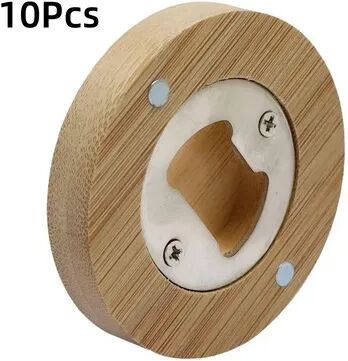
Inspire Daily Merch Magnetic Wooden Bottle Opener Easy to Use Beer & Cocktail Lid Remover For Bar Tools And Gadgets 10pcsUnlock effortless bottle opening with this magnetic bottle opener. Crafted from solid wood, it combines a sleek, round design with powerful suction to help you open beer and cocktail bottles easily. Whether you're hosting a party or just unwinding...59,97 $*Shipping: 0,00 $Secure redirect to the provider
-
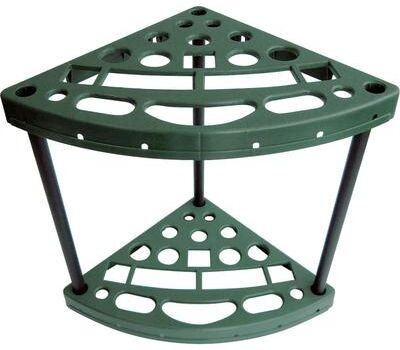
Garden Tool Organizer - Corner Storage Rack that Holds 18 Yard Tools and Broom Holder - Garage Organizers & Storage by Sto-AwayOrganize your yard and garden tools with the Yard tool corner storage rack by Trademark Home. Cluttered garden tools can be dangerous and inconvenient.29,98 $*Shipping: 0,00 $Secure redirect to the provider
-
On Spot Shop Smokeless Aesthetic Candle Scented Candles Decoration Christmas Handmade DIY Home Room Decor Tools Accessories lemonIgnite your creativity and transform any space into a sanctuary of calm and style. Our Handmade DIY Scented Candles set is your allinone toolkit for crafting a personalized, cozy ambiance. With 26 unique shapes to choose from, you can mix and match...32,97 $*Shipping: 0,00 $Secure redirect to the provider


-
What are equivalence classes?
Equivalence classes are sets of elements that are considered equivalent based on a specific relation or criteria. In mathematics, equivalence classes are used to partition a set into subsets where each element in a subset is considered equivalent to every other element in that subset. Equivalence classes help to simplify complex structures and make it easier to analyze and understand relationships between elements. **
-
Are equivalence classes equal?
Equivalence classes are not equal in the sense that they may contain different elements. However, equivalence classes are equal in the sense that they represent the same set of elements that are equivalent under a given equivalence relation. In other words, two equivalence classes are equal if they contain the same elements that are related to each other in the same way according to the equivalence relation. **
-
What are equivalence relations?
Equivalence relations are a type of relation between elements of a set that satisfy three properties: reflexivity, symmetry, and transitivity. Reflexivity means that every element is related to itself. Symmetry means that if one element is related to another, then the other is related to the first. Transitivity means that if one element is related to a second, and the second is related to a third, then the first is related to the third. Equivalence relations are important in mathematics and other fields because they allow us to classify elements of a set into distinct equivalence classes based on their relationships with each other. **
-
Does this equivalence hold?
Without knowing the specific equivalence being referred to, it is difficult to provide a definitive answer. Equivalences in mathematics and logic are typically proven through rigorous reasoning and logical deduction. It is important to carefully examine the definitions and properties of the elements involved in the equivalence to determine if it holds true. Without further information, it is not possible to determine if the equivalence holds. **
What are equivalence points?
Equivalence points are the points in a titration where the amount of titrant added is stoichiometrically equivalent to the amount of analyte present in the sample. At the equivalence point, the reaction between the titrant and analyte is complete, and the solution is in its most stable state. This is often indicated by a sharp change in pH or a color change in the solution. The equivalence point is used to determine the concentration of the analyte in the sample. **
Can you determine all equivalence classes with respect to this equivalence relation?
No, I cannot determine all equivalence classes with respect to the equivalence relation without knowing the specific relation in question. The equivalence classes depend on the specific definition of the relation and the elements involved. Each equivalence class represents a set of elements that are related to each other according to the given relation. **
Top-Angebote
Products related to Equivalence:
-
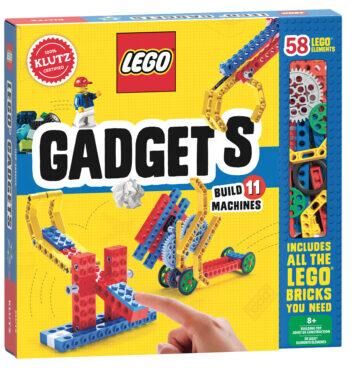
Klutz: LEGO GadgetsThis activity kit will have you building 11 machines including a gravity powered car and a wacky boxing robot. The fun doesn't stop once you've completed all of the projects in the book - open-ended prompts will inspire you to continue experimenting...24,99 $*Shipping: 0,00 $Secure redirect to the provider
-
Modern Harvest Tools & Trends SHIMOYAMA Teak Wood Tableware Spatulas: Triangular Cooking Spatula For Kitchen Gadgets & Portable Outdoor Camping Utensi 2SHIMOYAMA Teak Wood Tableware Spatulas Kitchen Gadgets Triangular Cooking Spatula Portable Outdoor Camping Utensils Scraper Use teak wood with excellent durability and oil resistance, Suitable for heating and cooking Chinese cuisineTwo sizes to...20,00 $*Shipping: 0,00 $Secure redirect to the provider
-
Inspire Daily Merch Magnetic Wooden Bottle Opener Easy to Use Beer & Cocktail Lid Remover For Bar Tools And Gadgets 10pcsUnlock effortless bottle opening with this magnetic bottle opener. Crafted from solid wood, it combines a sleek, round design with powerful suction to help you open beer and cocktail bottles easily. Whether you're hosting a party or just unwinding...59,97 $*Shipping: 0,00 $Secure redirect to the provider
-
What is equivalence?
Equivalence refers to the state of being equal or interchangeable in value, function, or meaning. In mathematics, equivalence is used to denote that two expressions or equations have the same value or meaning. In other contexts, equivalence can refer to the similarity or comparability of two things. Overall, equivalence implies a relationship of equality or similarity between two or more entities. **
-
Is equivalence transformation allowed?
Yes, equivalence transformation is allowed in mathematics. It involves manipulating an equation or expression by applying operations that do not change the solution set of the equation. This can include adding or subtracting the same quantity to both sides of an equation, multiplying or dividing both sides by the same non-zero number, or applying other algebraic operations that preserve the equality of the original equation. Equivalence transformations are commonly used to simplify equations, solve for unknown variables, or prove mathematical statements. **
-
What are equivalence classes?
Equivalence classes are sets of elements that are considered equivalent based on a specific relation or criteria. In mathematics, equivalence classes are used to partition a set into subsets where each element in a subset is considered equivalent to every other element in that subset. Equivalence classes help to simplify complex structures and make it easier to analyze and understand relationships between elements. **
-
Are equivalence classes equal?
Equivalence classes are not equal in the sense that they may contain different elements. However, equivalence classes are equal in the sense that they represent the same set of elements that are equivalent under a given equivalence relation. In other words, two equivalence classes are equal if they contain the same elements that are related to each other in the same way according to the equivalence relation. **
Similar search terms for Equivalence
-
Garden Tool Organizer - Corner Storage Rack that Holds 18 Yard Tools and Broom Holder - Garage Organizers & Storage by Sto-AwayOrganize your yard and garden tools with the Yard tool corner storage rack by Trademark Home. Cluttered garden tools can be dangerous and inconvenient.29,98 $*Shipping: 0,00 $Secure redirect to the provider
-
On Spot Shop Smokeless Aesthetic Candle Scented Candles Decoration Christmas Handmade DIY Home Room Decor Tools Accessories lemonIgnite your creativity and transform any space into a sanctuary of calm and style. Our Handmade DIY Scented Candles set is your allinone toolkit for crafting a personalized, cozy ambiance. With 26 unique shapes to choose from, you can mix and match...32,97 $*Shipping: 0,00 $Secure redirect to the provider
-
What are equivalence relations?
Equivalence relations are a type of relation between elements of a set that satisfy three properties: reflexivity, symmetry, and transitivity. Reflexivity means that every element is related to itself. Symmetry means that if one element is related to another, then the other is related to the first. Transitivity means that if one element is related to a second, and the second is related to a third, then the first is related to the third. Equivalence relations are important in mathematics and other fields because they allow us to classify elements of a set into distinct equivalence classes based on their relationships with each other. **
-
Does this equivalence hold?
Without knowing the specific equivalence being referred to, it is difficult to provide a definitive answer. Equivalences in mathematics and logic are typically proven through rigorous reasoning and logical deduction. It is important to carefully examine the definitions and properties of the elements involved in the equivalence to determine if it holds true. Without further information, it is not possible to determine if the equivalence holds. **
-
What are equivalence points?
Equivalence points are the points in a titration where the amount of titrant added is stoichiometrically equivalent to the amount of analyte present in the sample. At the equivalence point, the reaction between the titrant and analyte is complete, and the solution is in its most stable state. This is often indicated by a sharp change in pH or a color change in the solution. The equivalence point is used to determine the concentration of the analyte in the sample. **
-
Can you determine all equivalence classes with respect to this equivalence relation?
No, I cannot determine all equivalence classes with respect to the equivalence relation without knowing the specific relation in question. The equivalence classes depend on the specific definition of the relation and the elements involved. Each equivalence class represents a set of elements that are related to each other according to the given relation. **
* All prices are inclusive of VAT and, if applicable, plus shipping costs. The offer information is based on the details provided by the respective shop and is updated through automated processes. Real-time updates do not occur, so deviations can occur in individual cases. ** Note: Parts of this content were created by AI.